
Every gap in brain hemorrhage care puts recovery at risk
In aneurysmal subarachnoid hemorrhage, the realities of neurocritical care highlight the value of treatments well suited to the ICU environment.
aSAH: A severe neurological event
This form of brain hemorrhage carries critical risks—and is on the rise in the U.S.
An aneurysmal subarachnoid hemorrhage (aSAH) typically occurs after the rupture of an outpouching of an artery in the brain called an aneurysm. The immediate effects can be devastating: severe “thunderclap” headache, high pressure in the brain, extensive brain bleeding, rapid neurological decline, and loss of consciousness. In the moments after aneurysm rupture, every second counts. Patients effectively treated within the first 24 hours after symptom onset are significantly more likely to survive, and they are also less likely to require long-term care.1
Although subarachnoid hemorrhages are rare and represent only a small minority of all strokes, they remain highly lethal, with an overall mortality rate of approximately 30–35%.2 These statistics reflect the severity of aSAH, as certain patients do not survive long enough to receive hospital care, and for those who do, the risk of mortality remains high. Survivors often face high rates of morbidity and permanent cognitive impairment, and approximately 36-42% will develop a long-term disability.3
aSAH disproportionately affects younger patients, often under 60 years old. In the United States, the incidence of spontaneous subarachnoid hemorrhage increased from about 10.8 to 12.1 cases per 100,000 person-years between 2007 and 2017.4
36-42% experience long-term disability after aneurysm rupture3
12.1/100,000
person-years incidence rate4
In aSAH, life-saving care demands precision and timeliness.
The current standard of care for patients with aSAH in the U.S. is an oral drug. While it improves long-term neurologic outcomes in aSAH, it must be given orally or through a tube into the stomach. Drug absorption into the body is impaired in these critically ill patients with aSAH, so many patients aren’t able to fully absorb it.
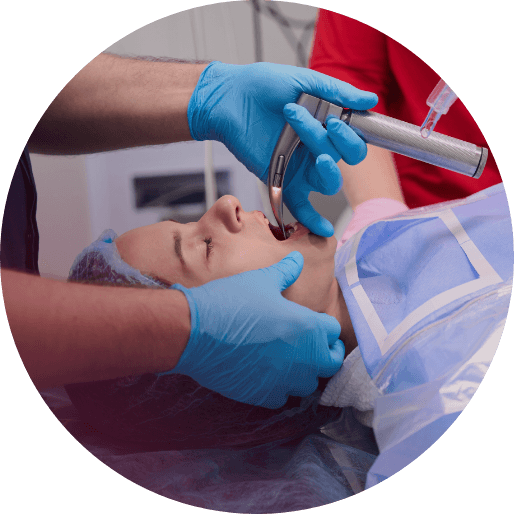
Additionally, an oral product is challenging for patients with high-grade aSAH, as they are often intubated and dependent on enteral feeding tubes for medication administration or may not have enteral access. This adds considerable strain for patients and care providers alike.
Manual capsule extraction or oral solution administration via the nasogastric route also increases the risk of missed or inaccurate doses, variable drug exposure, hypotension, and poor tolerance. This means that these patients may be given less of a life-saving therapy than medically indicated.
Variable bioavailability
Requires dosing every 4 hours
Variable drug exposure
Causes hypotension
Poor adherence
Poor tolerability

The demands on care teams…
Clinicians and hospitals may benefit from predictable and reliable therapies to treat patients with aneurysmal subarachnoid hemorrhage. In critically ill patients, particularly those who are intubated and require enteral administration, current oral therapy is often difficult to administer consistently, contributing to poor utilization and missed doses.
Dose-limiting hypotension drives treatment interruptions, poor compliance, and suboptimal patient outcomes.
Poor tolerability and a demanding dosing schedule reduce adherence during critical care.
Side effects and inconsistent dosing may delay patient recovery.
Poor pharmacokinetics lead to highly variable drug exposure with oral and nasogastric administration.
…and the recovery impacts on patients
Patients with aSAH are often burdened with lasting side effects.
This is why the timing and administration of treatment is critical in the acute setting.
Large pills can be difficult or impossible to swallow after a brain hemorrhage, adding stress during recovery.
Digestive side effects like diarrhea are common and can further weaken patients during critical care.
Dosing every four hours disrupts sleep and rest when the brain needs uninterrupted healing.
Patients who can’t swallow must rely on a nasogastric tube for days or weeks, causing ongoing discomfort.
Sign up for information on aSAH
By providing my information, I authorize Grace Therapeutics, Inc. and/or its agency to contact me via email. For more information, please review our Privacy Policy.
All subscribers have the option to discontinue receiving communication from aSAH in Focus. To unsubscribe from further communications, click “unsubscribe” at the bottom of any email.
References:
Buscot MJ, et al. Association of onset-to-treatment time with discharge destination, mortality, and complications among patients with aneurysmal subarachnoid hemorrhage. JAMA Netw Open. 2022;5(1):e2144039. doi:10.1001/jamanetworkopen.2021.44039
Macdonald RL. Aneurysmal subarachnoid hemorrhage: the last decade. Transl Stroke Res. 2020;11(3):356–370. doi:10.1007/s12975-020-00867-0
Roquer J, et al. Short- and long-term outcome of patients with aneurysmal subarachnoid hemorrhage. Neurology. 2020;95(13):e1819-e1829. doi:10.1212/WNL.0000000000010618
Xia C, et al. Trends in the incidence of spontaneous subarachnoid hemorrhages in the United States, 2007–2017. Neurology. 2023;100(2):e123–e132. doi:10.1212/WNL.0000000000201340